
Ask a new researcher where to find an Irish birth, marriage or death certificate and they will usually start with the county. But Irish civil registration was never organised by county — it was organised by Poor Law Union. Understanding these units, and how they changed, is one of the quiet keys to nineteenth-century Irish research.
What was a Poor Law Union?
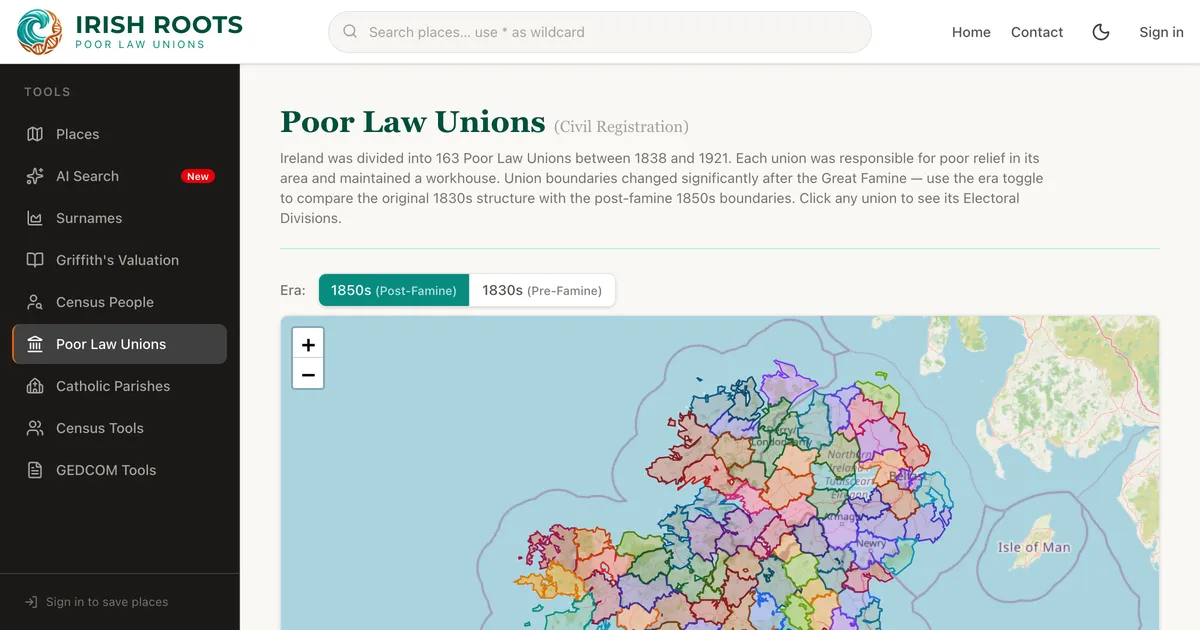
Between 1838 and 1921 Ireland was divided into Poor Law Unions — administrative districts each responsible for poor relief in its area and each centred on a workhouse. When civil registration of births, marriages and deaths began, it borrowed this same structure: the registration districts were the Poor Law Unions, and the sub-districts were built from their electoral divisions. If you have ever seen a “Superintendent Registrar’s District” on a certificate, that was a Poor Law Union.
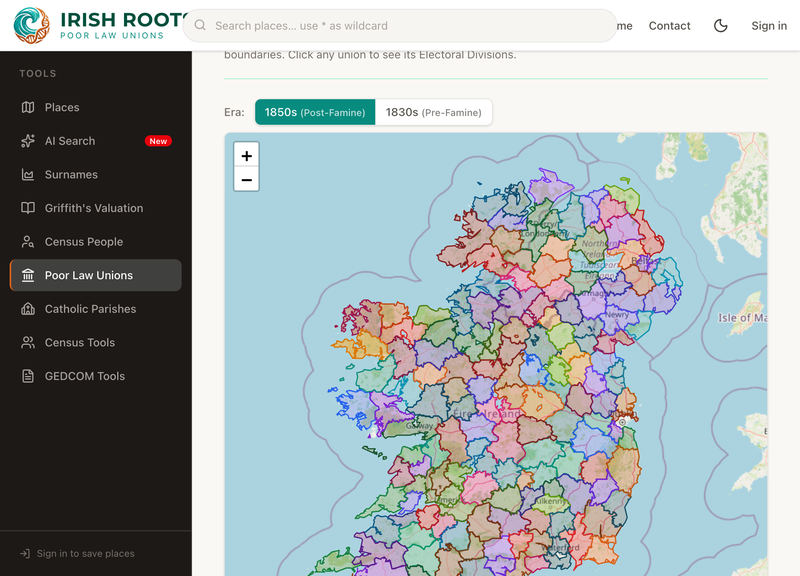
Ireland's Poor Law Unions — the districts that civil registration was built on.
Boundaries that moved
Here is the detail that trips people up. The Great Famine transformed the Poor Law system, and many unions were created or redrawn in its aftermath. A townland could sit in one union in the 1830s and a different one by the 1850s. Our tool lets you toggle between the original 1830s structure and the post-Famine 1850s boundaries, so you can see exactly which union — and therefore which registration district — applied in the period you are researching.
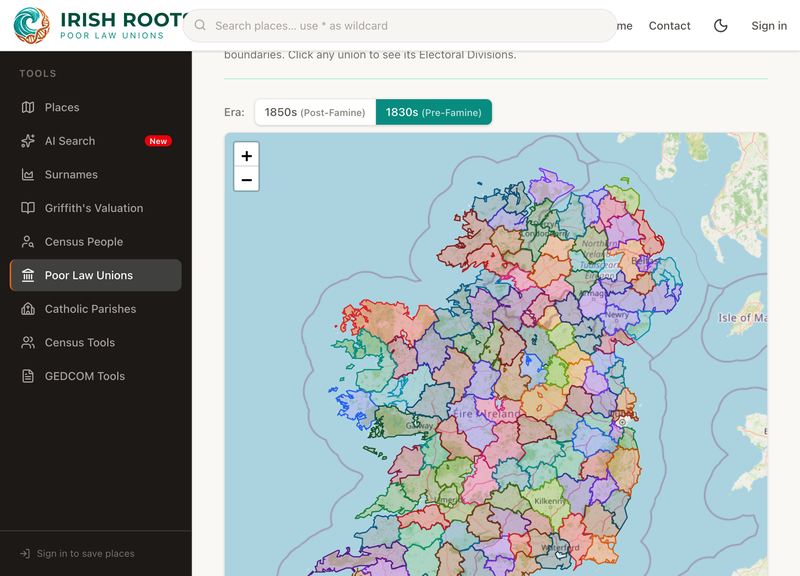
Flip between the 1830s and 1850s boundaries to see how the unions were redrawn after the Famine.
Down to the electoral division
Click any union and the tool shows the electoral divisions within it. Electoral divisions are the next level of detail down, and they are what the registration sub-districts were built from. Being able to move from a union to its divisions — and from there to individual townlands — means you can pinpoint precisely where a certificate would have been registered.
Find the right Poor Law Union and you’ve found the registration district your ancestor’s certificate lives in.
Irish Roots
Why it matters for your search
When you order a civil record from the GRO, or search the free indexes, knowing the correct union saves you from combing through the wrong district entirely. Use this tool to confirm the union for your ancestor’s townland in the right era, then take that name straight to the civil registration indexes.